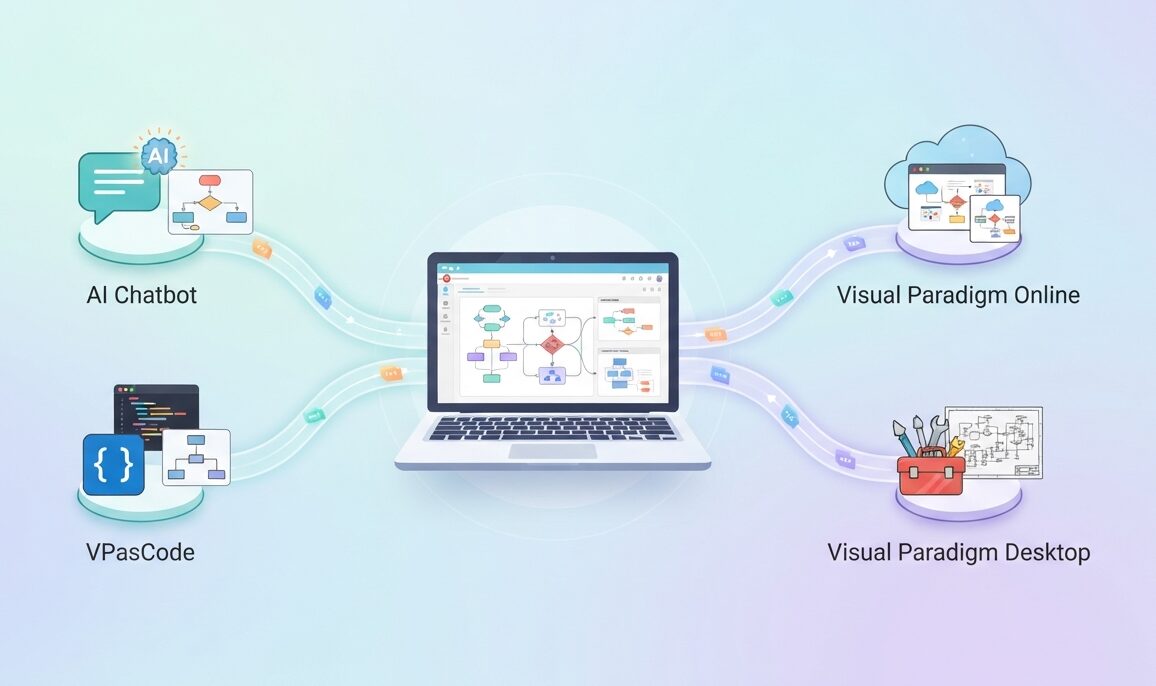
Deep Enterprise & Standard Modeling Engine
Visual Paradigm Desktop
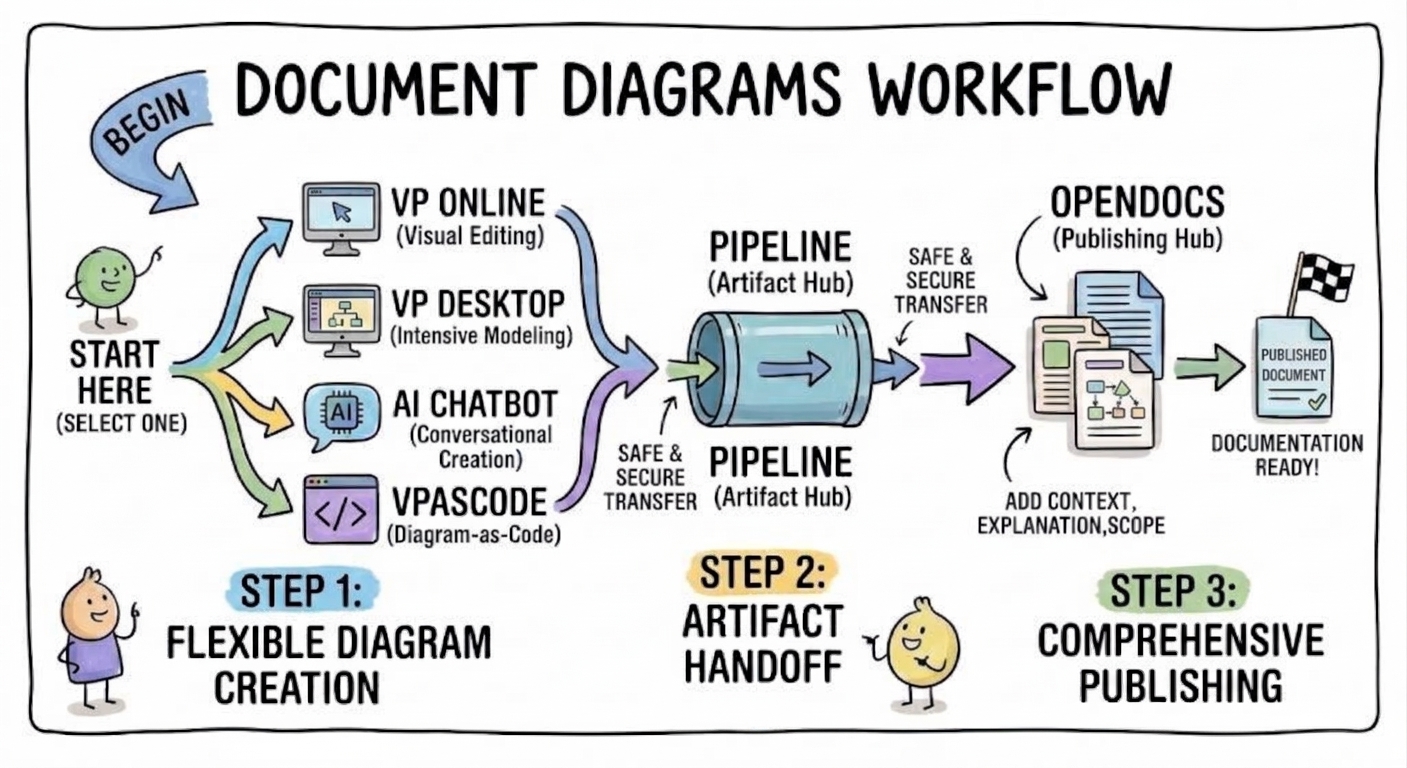
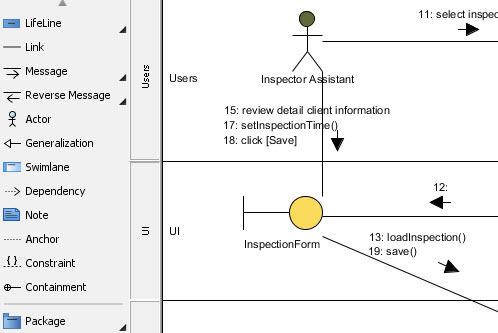
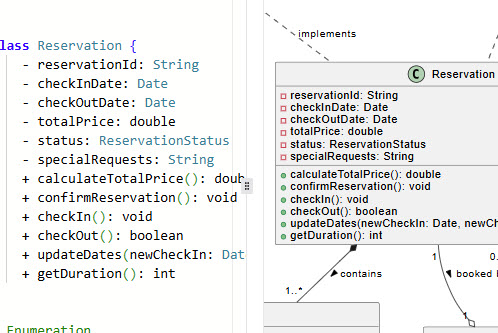
Engineers build formal TOGAF, ArchiMate 3.2, SysML, UML 2.5, and ERD models in Visual Paradigm Desktop. With one click, models are published into the ecosystem pipeline and embedded directly inside OpenDocs pages as scalable, live vector diagrams.
Integration Highlights:
- Formal semantic validation guarantees zero modeling notation errors in published docs.
- Enterprise meta-models stay linked to corporate target architecture specifications.
- Updates in Desktop automatically refresh embedded diagrams in published OpenDocs.
Browser-Based Diagramming & Infographics Suite
Visual Paradigm Online
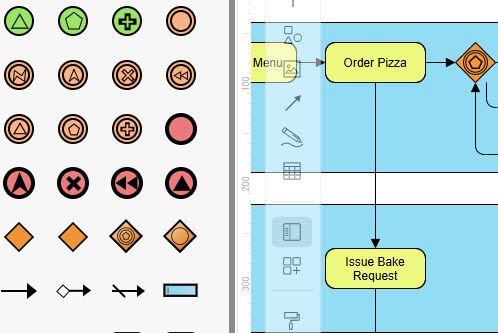
Teams draw flowcharts, BPMN process flows, charts, and visual dashboards in their web browser. Diagrams embed smoothly into OpenDocs pages alongside written procedure steps and operational policies.
Integration Highlights:

- Intuitive drag-and-drop web editor accessible to cross-functional teams anywhere.
- Data-driven charts and infographics update live in published OpenDocs manuals.
- Seamless drag-and-drop canvas layout for swift visual documentation.
Textual Diagram-as-Code Workspace
VPasCode
Developers write PlantUML, Mermaid, Graphviz, or D2 markup in a text-based workspace. The resulting visual diagrams are embedded directly into OpenDocs, allowing technical documentation to be maintained as code.
Integration Highlights:

- Declarative diagram markup stored directly alongside project documentation source.
- Live preview rendering with instant vector synchronization into published pages.
- Perfect for developer-first teams who prefer keyboard-driven text diagramming.
Conversational Modeling & Grounded Insights
AI Diagramming Chatbot
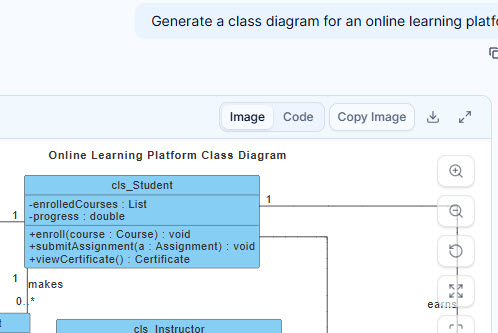
Prompt the AI Chatbot in natural language to synthesize architecture diagrams grounded in team notes from NotesKeep. The Chatbot publishes generated diagrams directly into OpenDocs Architectural Decision Records (ADRs).
Integration Highlights:

- Turn unorganized meeting notes and research transcripts into structured visual diagrams.
- Iteratively refine diagrams through follow-up conversations without manually redrawing.
- Full bi-directional traceability from published OpenDocs pages back to source NotesKeep notes.
What You Can Do
A Complete Solution for Technical Documentation
OpenDocs eliminates the gap between visual architecture models and written specifications.
Capability 01
Publish Project Documentation
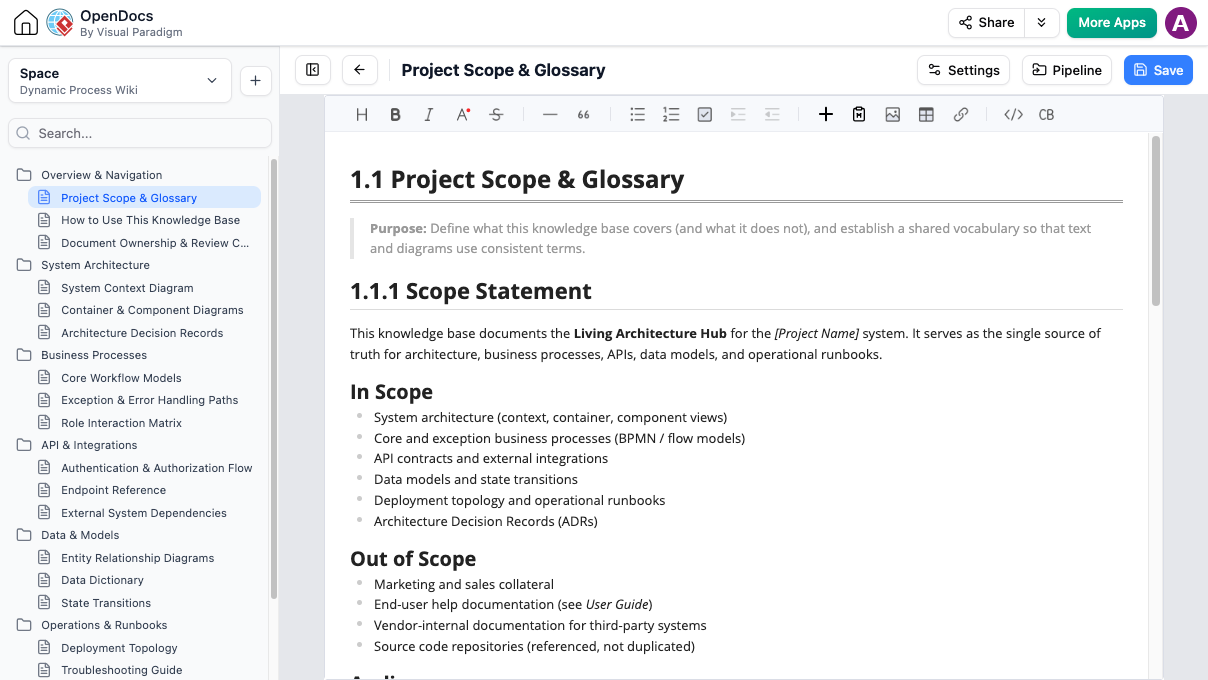
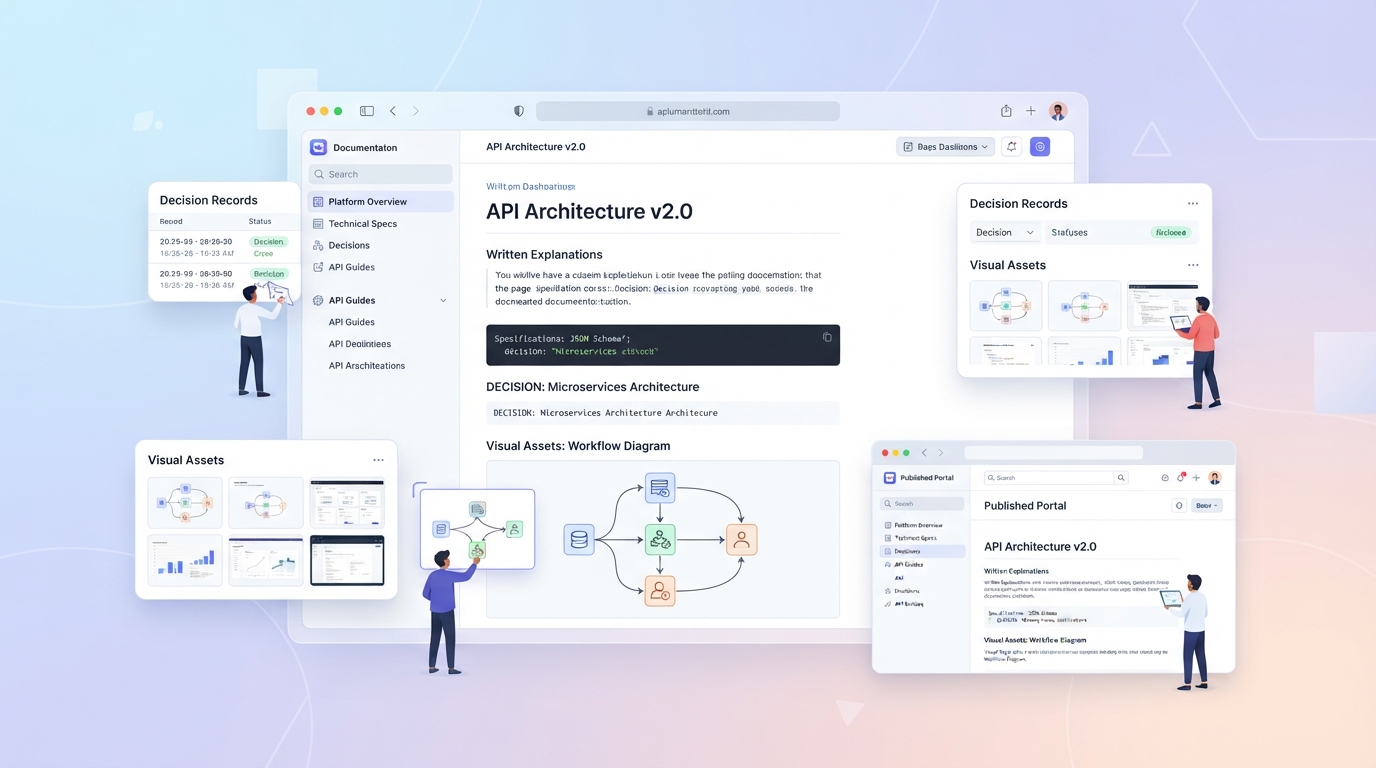
OpenDocs is the documentation destination in the ecosystem designed to combine written explanations, specifications, and decision records with visual assets into published portals. Create responsive, searchable knowledge spaces that stakeholders can trust without maintaining fragile wikis.
- Searchable knowledge spaces
- Multi-page tree navigation
- PDF & web publishing
Capability 02
Place Written Context Alongside Visuals
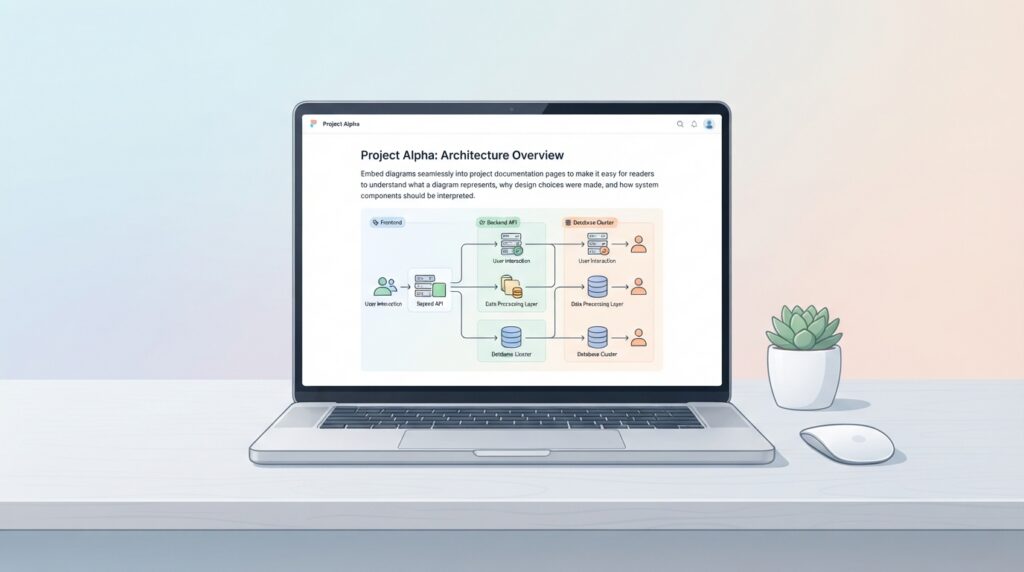
Embed diagrams seamlessly into project documentation pages to make it easy for readers to understand what a diagram represents, why design choices were made, and how system components should be interpreted. Never leave complex models without their vital backstory.
- In-line model explanations
- Trade-off rationale
- Component-level annotations
Capability 03
Integrate Visuals From Across Creation Tools
Effortlessly pull in diagrams created or refined across the entire ecosystem—whether generated by the AI Chatbot, coded in VPasCode, built in Visual Paradigm Online, or engineered in Visual Paradigm Desktop.
- Unified ecosystem pipeline
- Multi-tool compatibility
- Continuous vector sync
Tailored for Every Stakeholder
Built for Cross-Functional Collaboration
See how OpenDocs empowers each role to write and publish documents with embedded Visual Paradigm artifacts.
Ecosystem Collaboration
Technical Writers & Documentation Leads
Produce authoritative engineering portals with live vector models that never fall out of date.
Why OpenDocs Makes Documentation Effortless:
- Directly reference models created across Visual Paradigm without taking or updating screenshots manually.
- Embed interactive diagrams with zoom, layer toggles, and metadata tooltips for readers.
- Organize project books with intuitive tree hierarchies and automated change logs.
Ecosystem Collaboration
Enterprise & Solution Architects
Publish architectural decision records (ADRs) with direct model traceability back to enterprise designs.
Why OpenDocs Makes Documentation Effortless:
- Publish ADRs that connect written rationale directly to TOGAF, UML, and ArchiMate models.
- Prevent architectural drift by linking documentation to underlying versioned model components.
- Eliminate ambiguity during architecture reviews with unified diagrams and written consequences.
Ecosystem Collaboration
Business Analysts & Process Engineers
Bridge business requirements with technical execution through embedded BPMN and user journey models.
Why OpenDocs Makes Documentation Effortless:
- Embed live BPMN 2.0 process flows alongside detailed business policy rules and RACI matrices.
- Ground specifications in project notes captured during discovery sessions in NotesKeep.
- Provide auditors with single-click access to compliant operational workflows and traceability.
Ecosystem Collaboration
Product Managers & Engineering Leads
Create shared understanding across engineering, design, and executive stakeholders.
Why OpenDocs Makes Documentation Effortless:
- Transform complex technical systems into clear, readable product specifications for all teams.
- Keep release documentation in sync with sprint changes without manual documentation maintenance.
- Provide non-technical stakeholders with intuitive visual diagrams alongside plain-English explanations.